How to Find a Water Leak
The meter tells the truth before any wall does, so working out how to find a water leak starts there. Read it with the house quiet, wait, then read it again.
If we're late, $100 comes off your bill

- Licensed and InsuredEvery job done by a licensed plumber. QBCC No: 15024607
- Fixed Quote FirstFlat-rate pricing, agreed before any work starts
- Lifetime Labour WarrantyBacked by our Fix-It-or-It's-Free guarantee (T&Cs apply)
- $0 Call-Out FeesNo extra charge for nights, weekends or public holidays
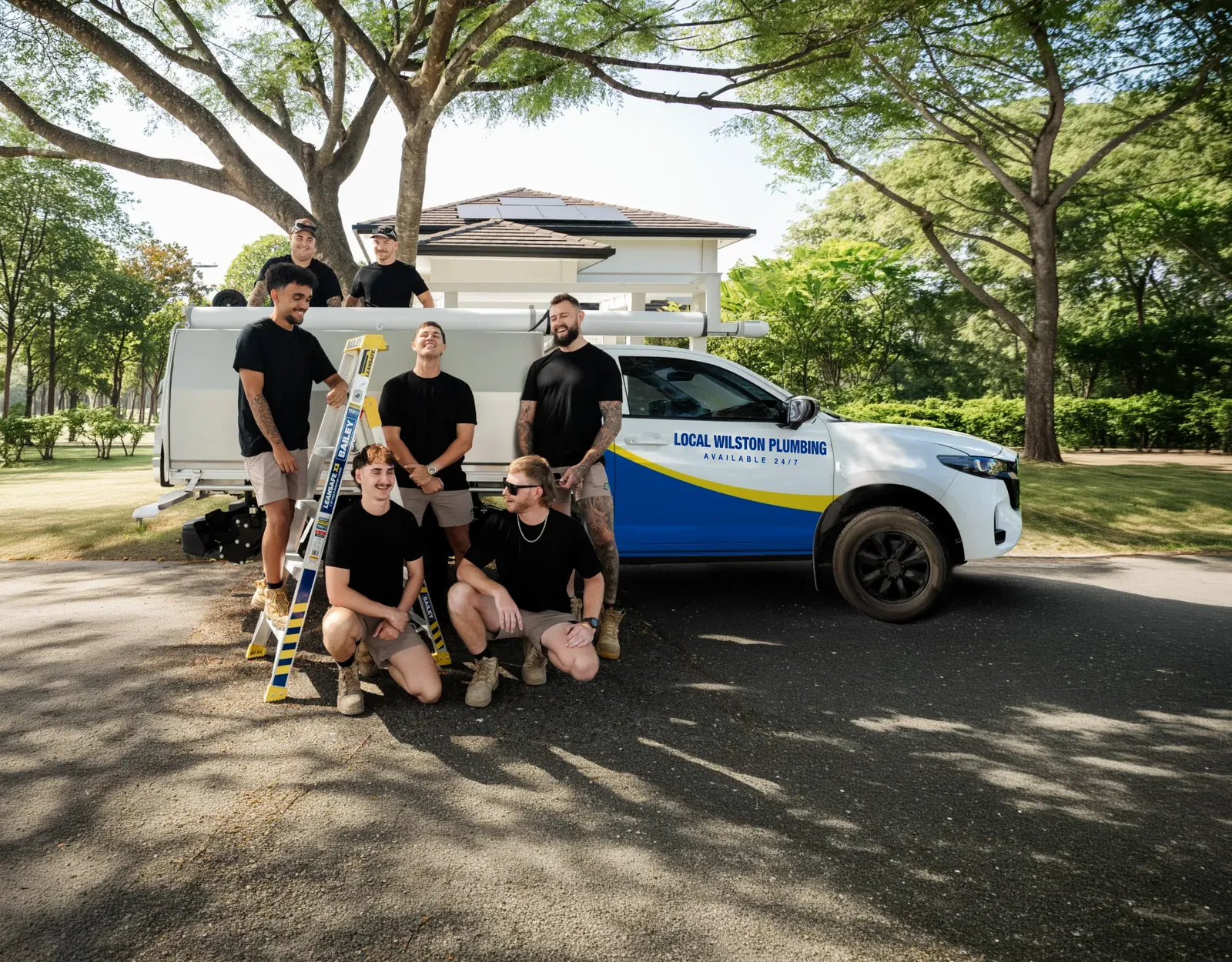
Wilston's pre-1940 housing keeps plenty of original galvanised supply line hidden in wall cavities, and a joint that weeps can go unnoticed for months. Our Wilston team works through the hunt below in that order, because the meter rules the whole property in or out at once.
Once the check says yes, a licensed plumber takes over.
Does Your Meter Move With Everything Off
The check runs like this: shut the house down, photograph the meter, keep everything dry through a quiet period, then read it again and compare. Any movement while the house stands dry means a pipe is losing water somewhere on the property.
Work through it like this:
- Switch off every tap and appliance that uses water: the washing machine, the dishwasher, any fridge plumbed into the supply, plus irrigation if the garden has it. Leave the stopcock, the shut-off valve at the meter, open.
- Photograph the meter numbers, red digits included, so nothing rests on memory.
- Let the house sit with nothing using water for at least one hour. The longer the quiet stretch, the surer the answer.
- Read the meter again. Any change in the numbers means a leak is worth a licensed plumber's attention.
Most meters here sit in a low box flush with the verge out the front, sometimes set into the footpath, so take a torch for the lid.
A bill that climbs though nobody changed their habits is the usual first clue. The water utility runs a program to spot high water use and contacts customers where it can, but it says not to count on that alone, so read your own dial.
Toilets, Taps, Showers and Appliances
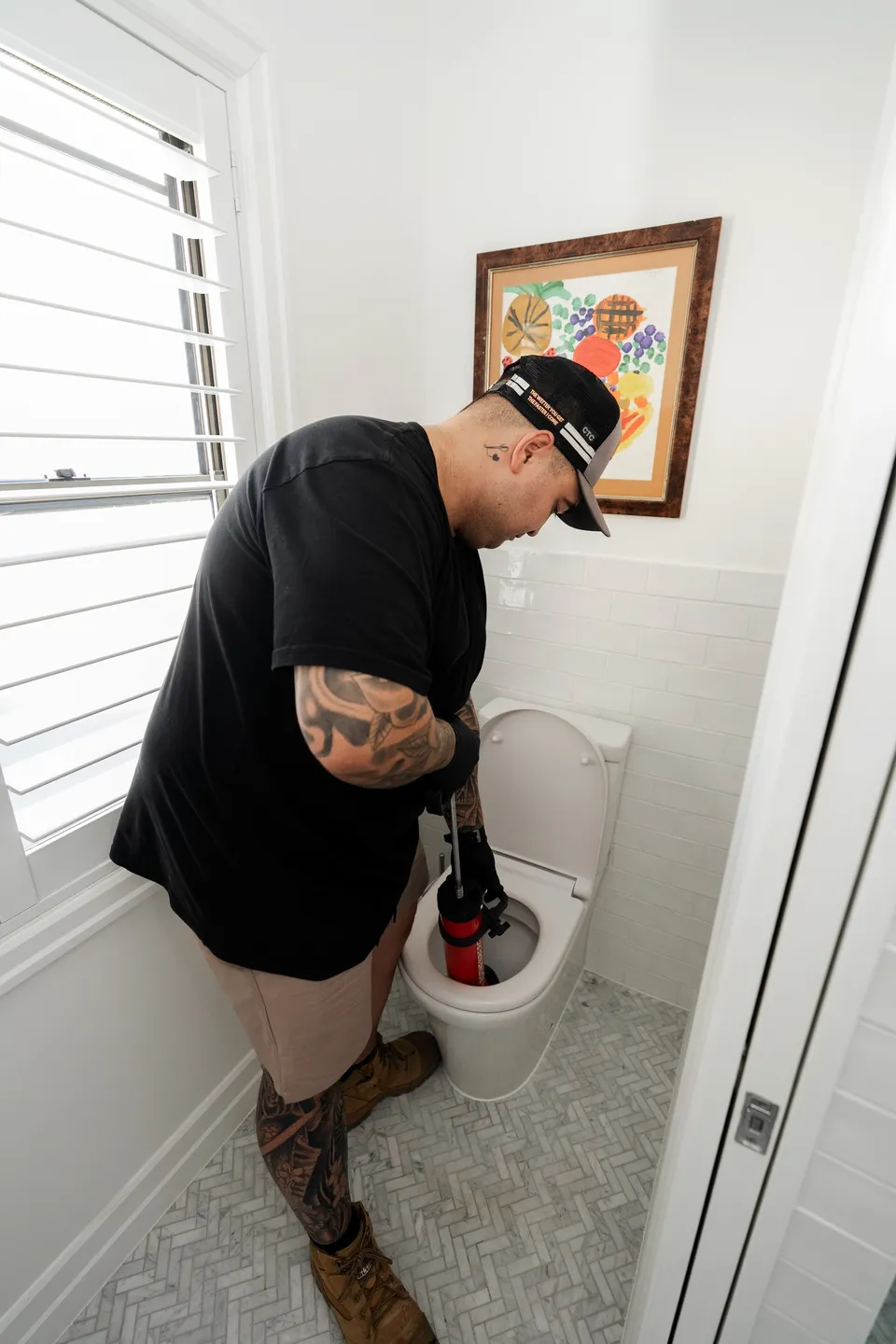
Hunt indoors in this order: the cisterns first, the tapware next, the appliances after that, and the surfaces last.
The cistern test
squeeze a little food colouring into the toilet's cistern, the tank behind the bowl, and do not flush for a while. Colour creeping into the bowl without a flush means the cistern is leaking, so flush afterwards, since the dye leaves no stain on ceramic.
Taps and showers
wind each one fully off and check the spout and base joints for drips, and give the hot water system a look for weeping.
Appliances
check the feed lines on the plumbed-in fridge and the dishwasher, plus the hoses behind the laundry tub.
Surfaces
damp or stained walls and ceilings, a musty smell, finishes gone swollen or peeling, and a warm patch on a floor all point to hidden water.
Damp under an old high-set house on the creek flats can be saturated ground rather than a leaking pipe, so trust the meter before anyone opens a floor.
Taps, Tanks and Wet Ground Outside
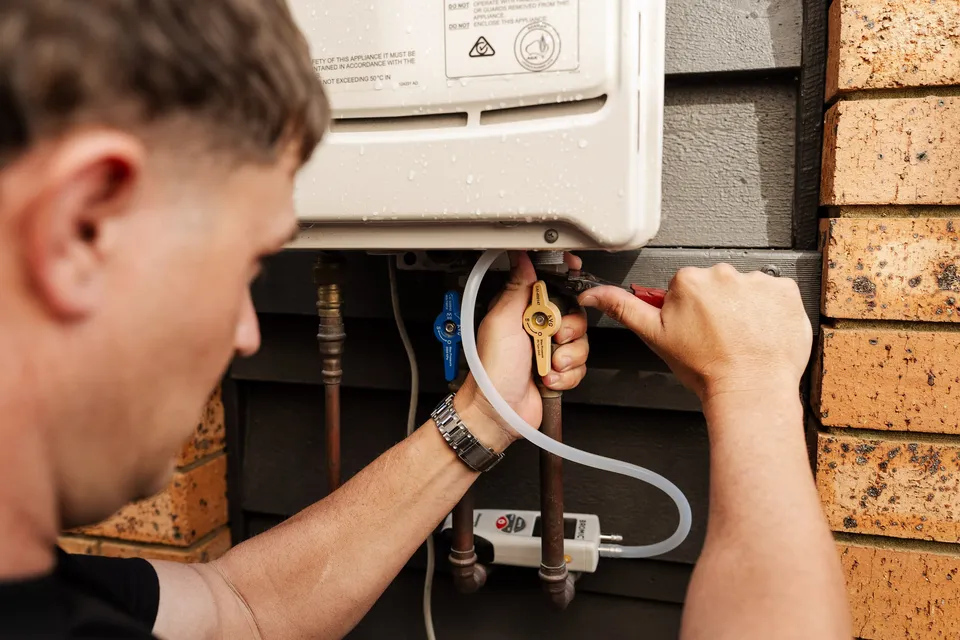
Outside, three things deserve a look: the garden tap and its hose fitting, any rainwater tank, and the state of the ground.
Outdoor taps
a garden tap that drips can quietly shed thousands of litres over a season, so dry the spout and check back later.
Rainwater tanks
a tank topped up automatically with town water can refill itself on the sly, because a faulty solenoid, the electric valve that opens the mains line, keeps letting town water in. Diagnosing and swapping that part is a job for the trade.
The ground
a lawn gone spongy, greener than its neighbours, or paving that has lifted all point to a buried leak. On the flats near Ruby Robinson Reserve the soil stays wet long after storm rain, so compare your patch with next door's before trusting green grass.
The pool
if the house has one, fill a bucket with pool water and stand it on the top step, level with the surface, then mark the waterline on both. Give the pool 24 hours with nobody swimming, then compare: a bigger fall in the pool than in the bucket points to a leak, and matching falls are evaporation.
Who Fixes the Leak You Find
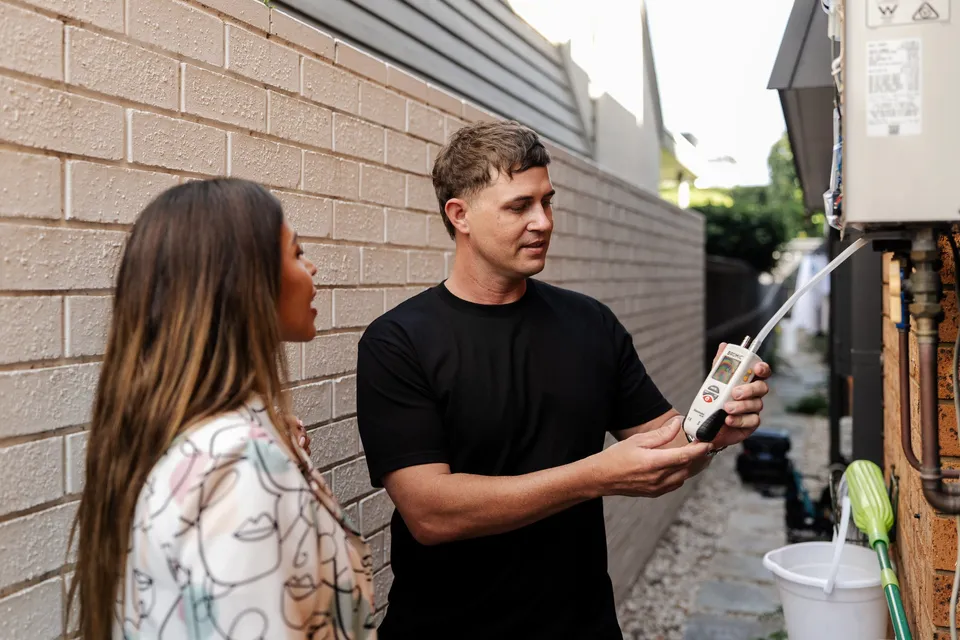
A drip found at a fixture explains the moving meter, and a meter still moving with nothing found means the leak sits out of sight. A concealed leak can hide underground, under a driveway or inside a wall, and it usually breaks the news through a big bill or water damage.
Repairing a broken or damaged pipe is classed as minor work in Queensland, so the repair belongs to a QBCC licensee, with no permit needed and no Form 4 lodged. Every pipe and fitting from the meter onto the property is the owner's to maintain. The QBCC's unregulated tasks, a tap washer or jumper valve, a cistern washer, a shower head, a filter cartridge, are the only bits an owner may swap.
Our leak detection page explains which side of the meter the leak falls on and what a flooded meter box means.
Hidden Leak Questions Answered
Call (07) 3523 7172Who is responsible for a hidden leak in Wilston?
The property owner, for every pipe from the meter onto the property. Urban Utilities maintains the public mains and the sewer, so a hidden leak on private land is yours to get repaired.
How do plumbers find a leak I cannot find?
We confirm the meter result first, then isolate stretches of pipe and pressure-test each in turn, listening along the run and taking moisture readings as we go. Nothing gets opened up before those checks, and our leak detection page has the detail.
Will the water utility reduce my bill for a hidden leak?
Yes, sometimes. The utility's concealed leak rules ask that the leak was out of sight, past the meter, repaired inside its timeframe, and supported by an invoice from a licensed plumber. Leaking taps and running cisterns miss out, and our leak detection page spells out the conditions.
Can I fix a hidden leak myself in Wilston?
No, an owner cannot. Repairing a broken pipe counts as minor work under Queensland rules, which only a licensee may carry out. The QBCC's unregulated list, tap washers and jumper valves, cistern washers, shower heads and filter cartridges, is all a homeowner may swap.

Call Us Once the Meter Has SpokenWe'll call you back.
Book on (07) 3523 7172 for plumbing anywhere in Wilston. We're available 24/7, there's no extra charge for nights, weekends or public holidays, and every job comes with $0 call-out fees.
To claim your $0 call-out fee, call (07) 3523 7172 today.